

Introduction: Finding the Right Everyday Commuter Bag
A commuter bag has a demanding job. It must carry your essentials comfortably through crowded platforms, long walks and busy offices, and still look polished when you arrive. Get it right and the day runs smoothly. Get it wrong and you spend the journey adjusting a slipping strap or digging for your keys.
Two silhouettes dominate this conversation: the crossbody and the shoulder bag. Both are firm favourites among designer handbags and contemporary leather goods, yet they behave very differently over the course of a working day. So which one deserves a place on your arm, or across your body, every morning? Let us look at each in turn.
Crossbody Bags: Hands-Free Convenience Meets Everyday Functionality
Design and Defining Characteristics
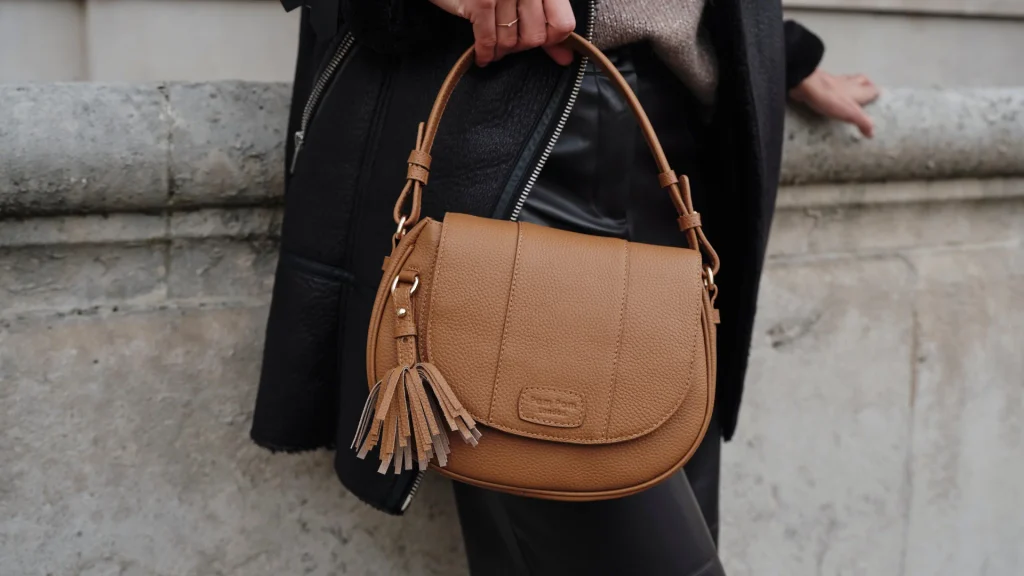
A crossbody bag is defined by its long, usually adjustable strap, which is worn diagonally across the torso. Styles range from compact, structured shapes to soft, slouchy pouches, and many feature a flap or zip closure that sits neatly against the body.
Comfort and Weight Distribution
Because the strap crosses the body, the weight is spread across the shoulder and back rather than concentrated on one point. For lighter loads, this feels remarkably natural, and it keeps your bag stable even when you are moving quickly.
Security and Accessibility
With the bag positioned in front of you, it stays within sight and reach, which is reassuring in crowded stations or on busy streets. A good crossbody also leaves both hands free for a coffee, a phone or a transit card.
Advantages for Public Transport
On packed trains and buses, a crossbody is difficult to dislodge, and its slim profile takes up little space. It is also easy to swing round to the front when seats are tight.
Potential Drawbacks
- Strap pressure: A thin strap can dig into the shoulder or neck when the bag is heavy
- Limited capacity: Most crossbodies struggle to hold a laptop or a full day’s supplies
- Outerwear friction: The strap can crease a coat or tailored jacket over time
Shoulder Bags: Timeless Elegance and Effortless Versatility
Design and Defining Characteristics
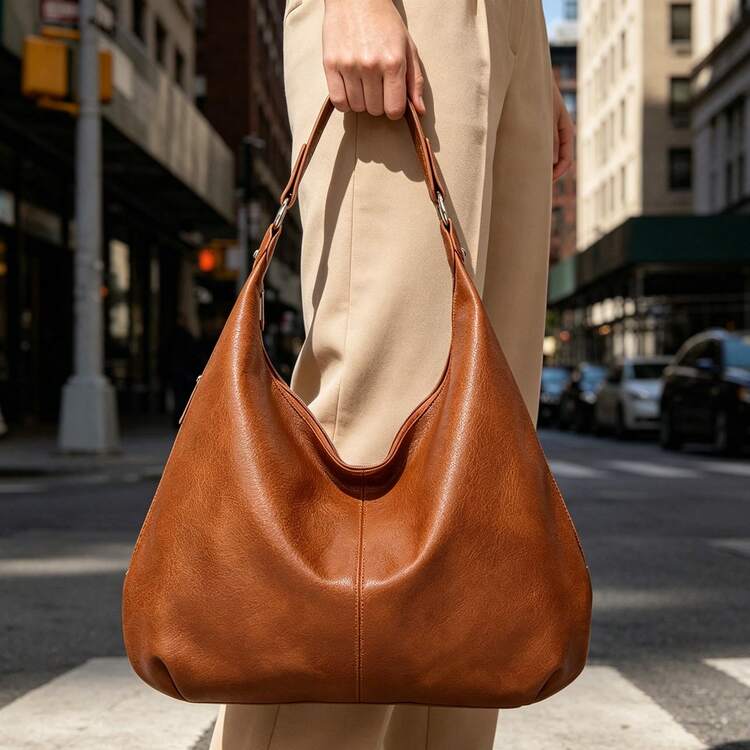
A shoulder bag is carried on one shoulder using a single strap of moderate length. The silhouettes are broad, from sleek baguette shapes and structured half-moons to roomy hobo styles, and many convey a refined, classic elegance.



Ease of Access and Organisation
Slipping the bag off your shoulder gives you quick access to the interior, and the generally larger body allows for thoughtful organisation, with zip pockets, slip compartments and sometimes a dedicated space for a tablet.
Styling Versatility for Professional Environments
Shoulder bags tend to read as formal and composed. They pair seamlessly with tailoring, knitwear and dresses, making them a natural companion for the office and for client meetings.
Advantages for Carrying Work Essentials
With more internal volume, a structured shoulder bag can hold a slim laptop, documents, a small cosmetics pouch and a water bottle without losing its shape.
Potential Drawbacks
- Slipping straps: Smooth fabrics and sloped shoulders can cause the bag to slide
- Uneven weight distribution: Carrying on one side may strain the neck and shoulder over time
- Reduced security: The bag sits to the side or behind you, so it is harder to monitor in crowds
Crossbody vs. Shoulder Bags: A Practical Comparison
Each style performs differently depending on what matters most to you.
- Comfort and ergonomics: Crossbody bags distribute weight more evenly for light loads, while shoulder bags can feel heavier on one side. For heavier loads, a wide, padded shoulder strap can outperform a thin crossbody strap.
- Storage and capacity: Shoulder bags generally win, offering more space and more compartments.
- Security: Crossbody bags are the stronger choice, since they remain close to the body and in your line of sight.
- Accessibility: Both are convenient, though shoulder bags are often quicker to open, while crossbody bags may require a small adjustment first.
- Professional appearance: Shoulder bags have a slight edge in formal settings, although a sleek, structured crossbody in smooth leather looks equally polished.
- Everyday versatility: Crossbody bags transition more easily from commute to errands to evening, thanks to their hands-free ease.
In short, the crossbody prioritises convenience and security, while the shoulder bag prioritises capacity and formality.
Which Bag Is Better for Different Commuting Lifestyles?
The Public Transport Commuter
Choose a crossbody. It stays secure in crowds, keeps your hands free for holding rails and tapping cards, and moves easily through tight spaces.
The Laptop-Carrying Professional
A structured shoulder bag with a padded or wide strap suits you best, offering the capacity and polished look that office life demands. If your load is heavy, consider a larger tote-style option instead.
The Frequent Walker
Go for a lightweight crossbody with an adjustable strap. It stays in place as you move and avoids the sliding that plagues shoulder bags on long walks.
The Work-to-Social Switcher
A versatile, medium-sized bag in a neutral shade can do both jobs. A shoulder bag with a detachable strap is an excellent solution, allowing you to wear it either way.
How to Choose the Perfect Everyday Commuter Bag
A few practical considerations will help you invest wisely.
- Size: Measure your daily essentials first, then choose a bag that holds them without bulging
- Material: Smooth or grained leather offers durability and a professional finish, while coated fabrics suit wet climates
- Strap adjustability: Look for a strap that adjusts easily or detaches, giving you flexibility
- Compartments: Internal pockets keep keys, cards and devices organised and easy to find
- Weight: A bag that is heavy when empty will be punishing when full, so check this before buying
- Construction quality: Examine the stitching, hardware and strap attachments, as these take the most strain
Final Verdict: Choosing a Bag That Works for Your Everyday Life
Neither style is universally better. The crossbody excels in security, comfort for lighter loads and hands-free freedom, while the shoulder bag offers capacity, organisation and a more formal presence. If your commute is busy and your load is light, choose a crossbody. If you carry more and your workplace leans formal, choose a structured shoulder bag. And if you cannot decide, a convertible style with a removable strap gives you the best of both.


Frequently Asked Questions
Is a crossbody bag appropriate for the office?
Yes, provided it is structured, made from quality leather and kept in a refined neutral shade.
Which style is easier on the shoulders?
Crossbody bags distribute lighter loads more evenly, but a wide, padded strap makes heavier shoulder bags more comfortable too.
Which is safer in crowded places?
A crossbody, as it stays in front of you and is harder to snatch.
Can I use one bag for both work and evenings?
Absolutely. A mid-sized bag in black, tan or taupe with a detachable strap adapts easily to both.