
The underlying approach: the framework is educational and moves from knowledge to decision. It begins with why leather quality matters, defines the two classifications, then explores each on its own terms before comparing them directly. It then shows how the material shapes handbag design and closes with practical buying guidance. The reader goes from “what do these terms mean?” to “which one suits me?” in a logical sequence.
Introduction: Understanding the Value of Fine Leather
In contemporary handbag design, leather is not simply a covering. It determines how a bag looks, feels, ages and performs. Yet terms such as “full-grain” and “top-grain” are often used without explanation, leaving shoppers unsure what they are paying for. Understanding these classifications helps you read a product description with confidence, judge value fairly and choose a piece that suits your life. This guide explains the difference in clear, practical terms.
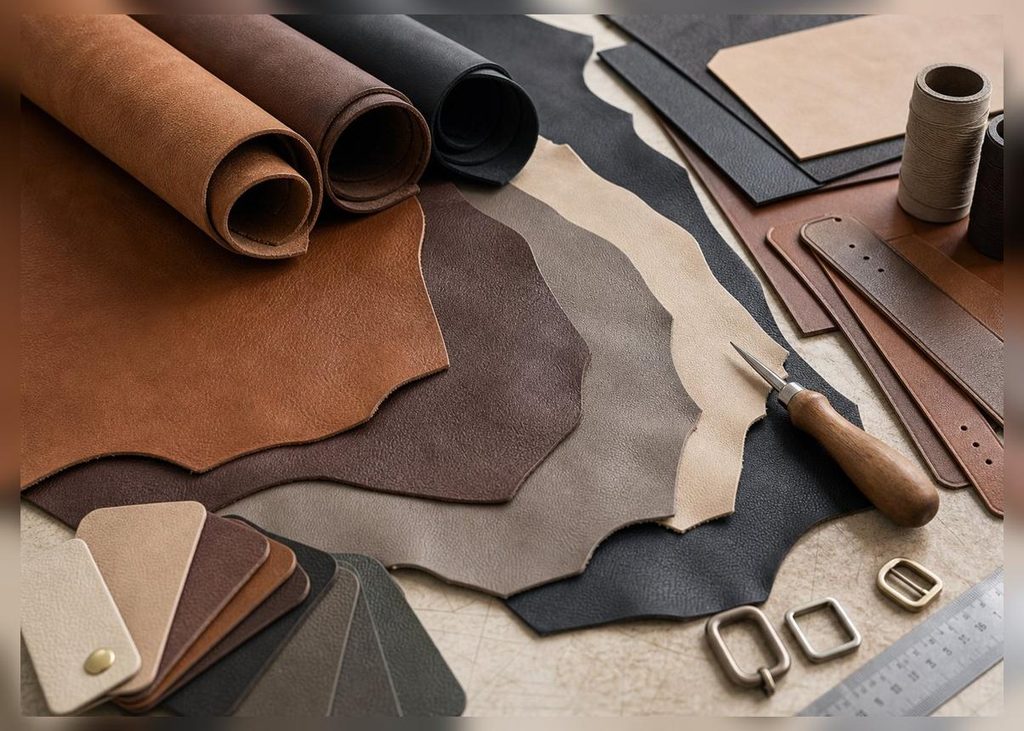
Understanding Full-Grain and Top-Grain Leather
Every hide has layers. The outermost layer, the grain, is the strongest and most characterful part. Both classifications come from this upper section, but they are treated differently.
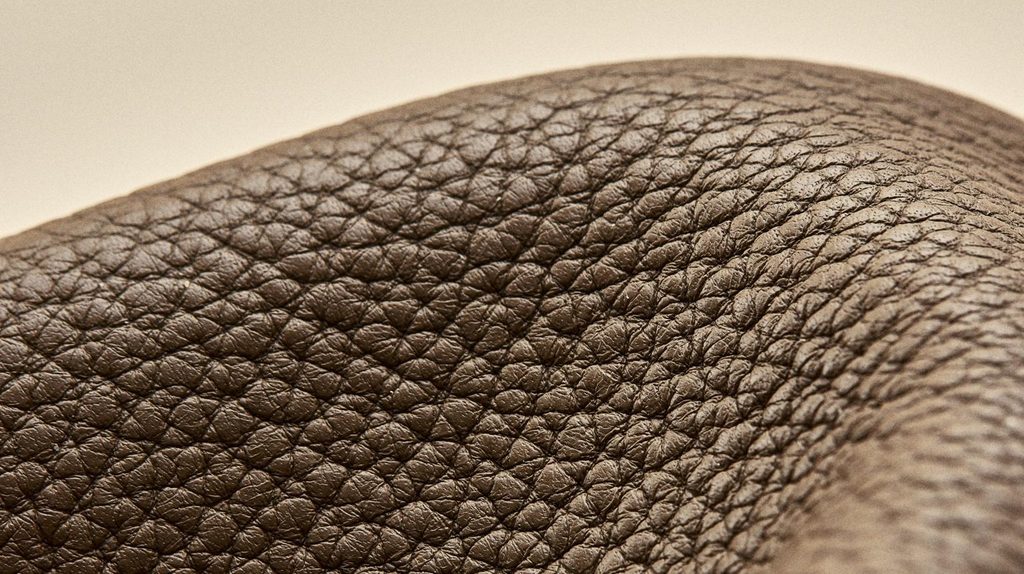
- Full-grain: The surface is left intact, with its natural markings and fibre structure preserved
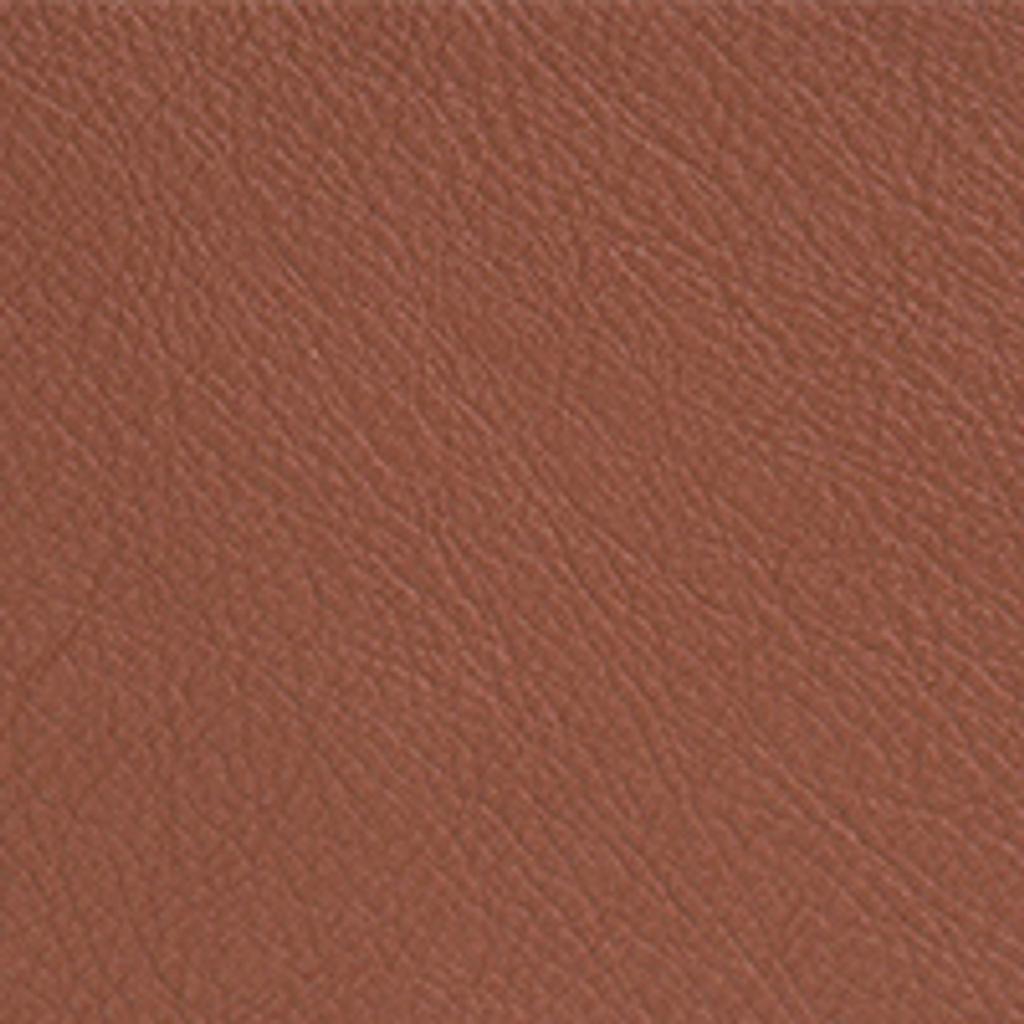
- Top-grain: The surface is lightly sanded or buffed to remove imperfections, then finished for a more uniform look
In short, full-grain keeps the hide’s natural surface, while top-grain refines it.
Full-Grain Leather: Natural Beauty and Timeless Character
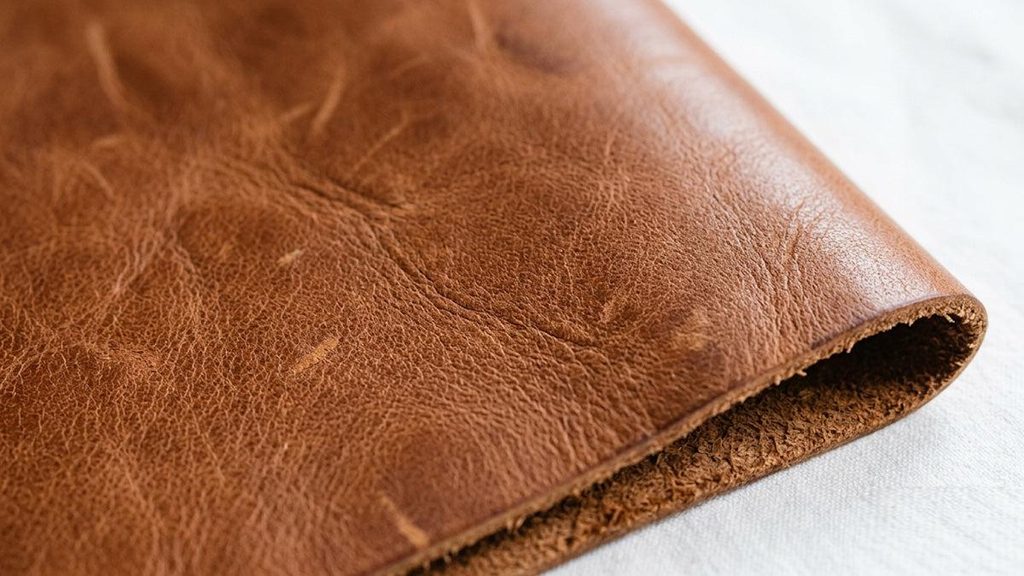
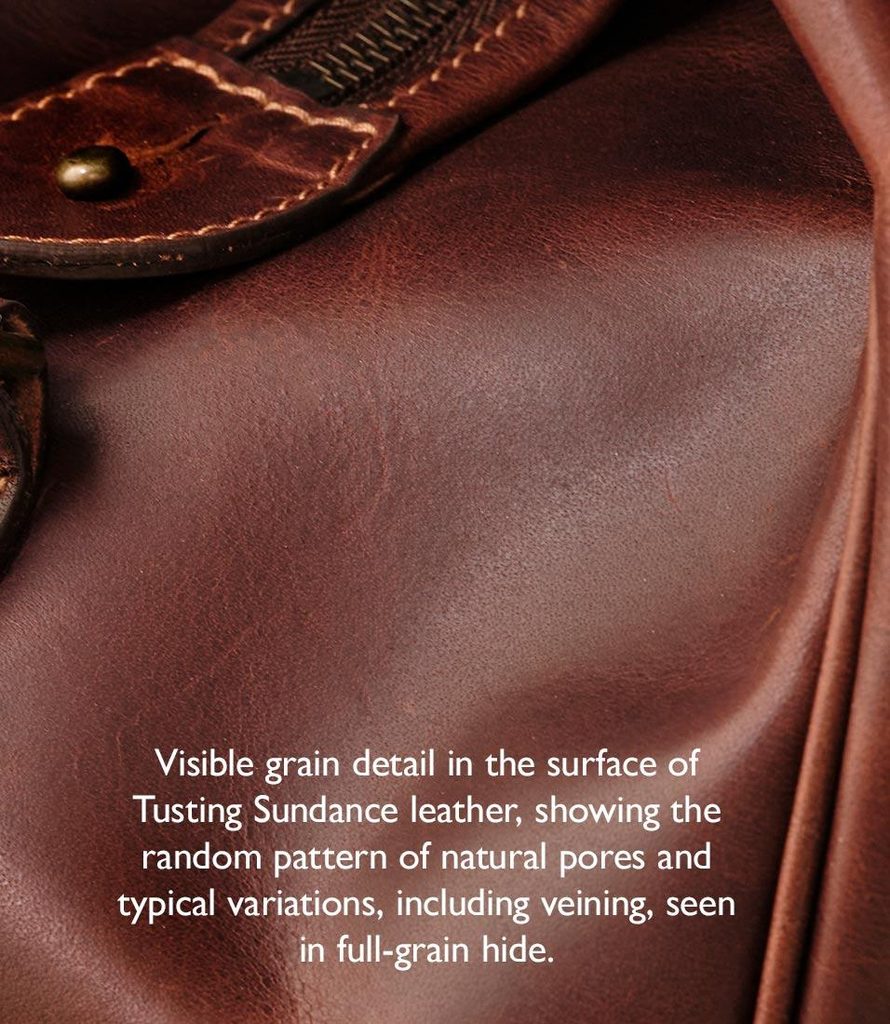
Full-grain leather is prized for authenticity. Because the surface is untouched, it retains the tight fibres that give the material exceptional strength.
- Natural grain: Subtle variations, pores and markings make every piece unique
- Durability: The dense fibres resist wear and can last for decades
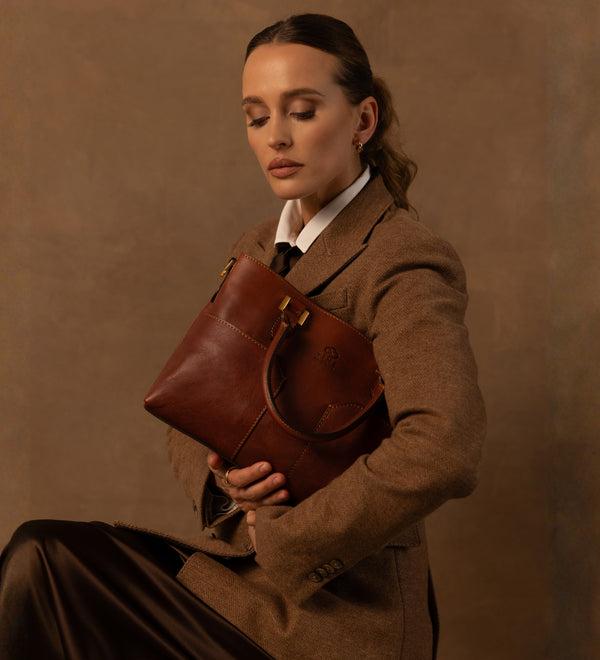
- Patina: With use, it deepens in colour and develops a soft, lustrous glow
- Texture: A rich, substantial hand feel that improves over time
It is closely associated with traditional craftsmanship, as it requires carefully selected hides with few flaws. Natural marks are not defects but evidence of genuine material.
Top-Grain Leather: Refined Finishes and Modern Appeal
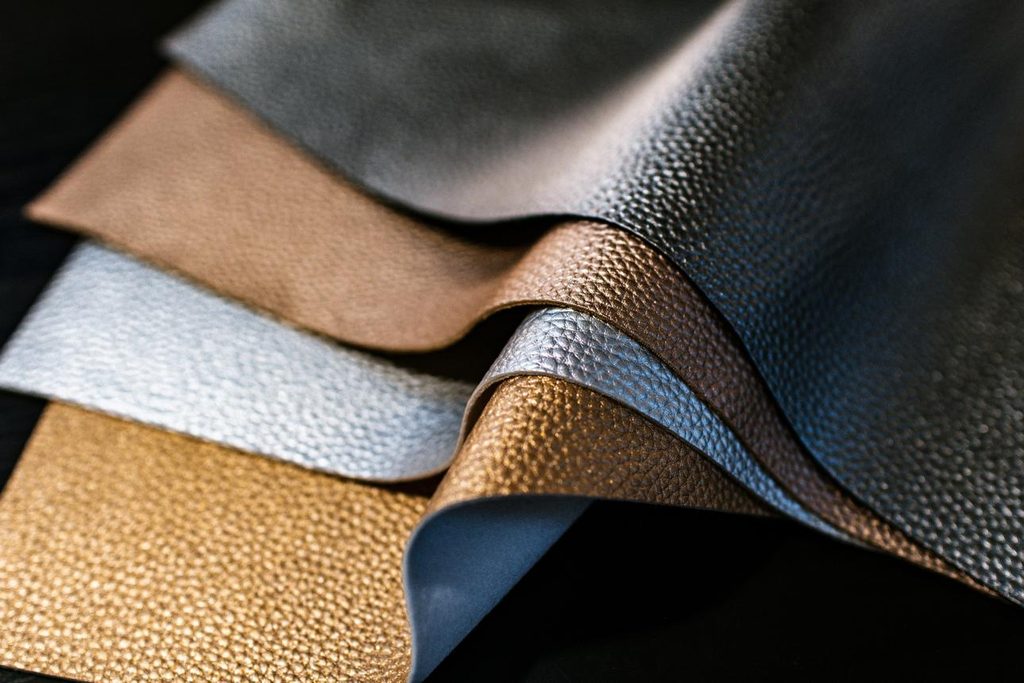
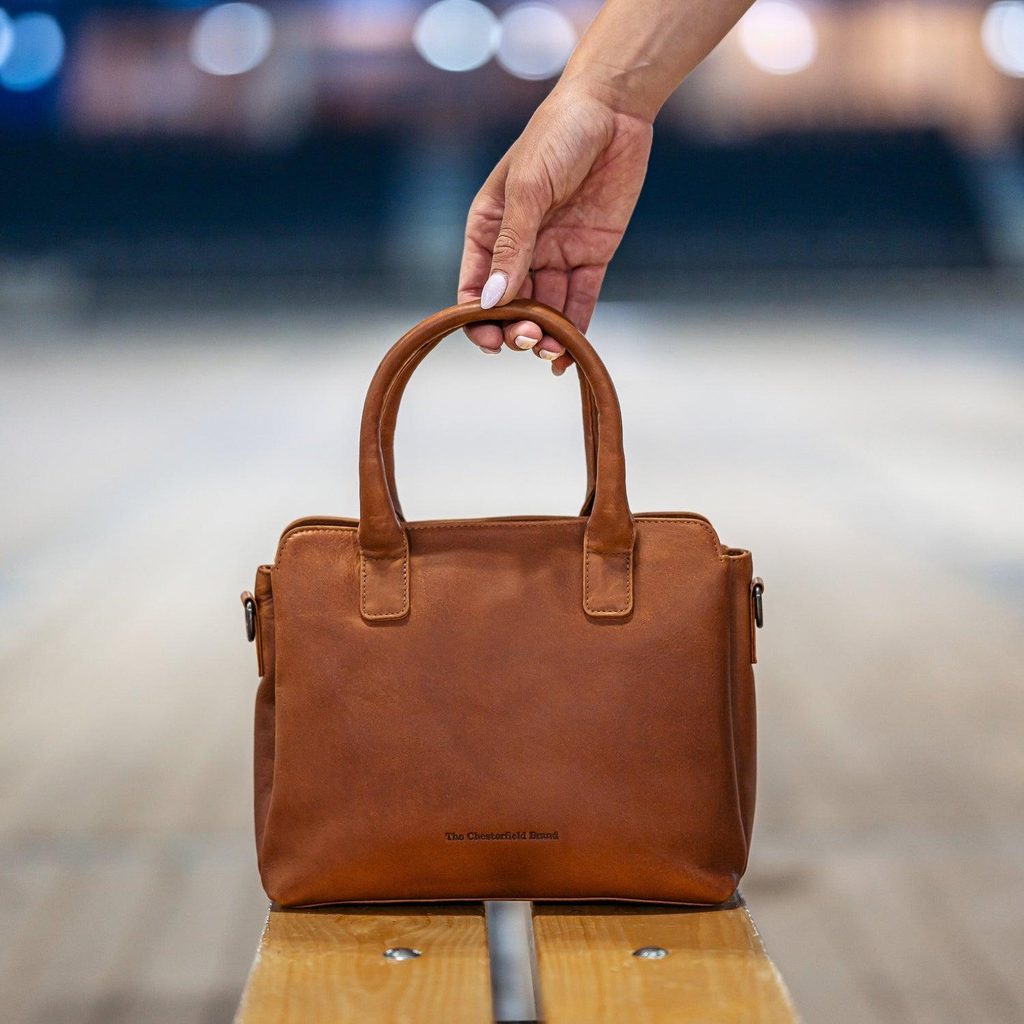
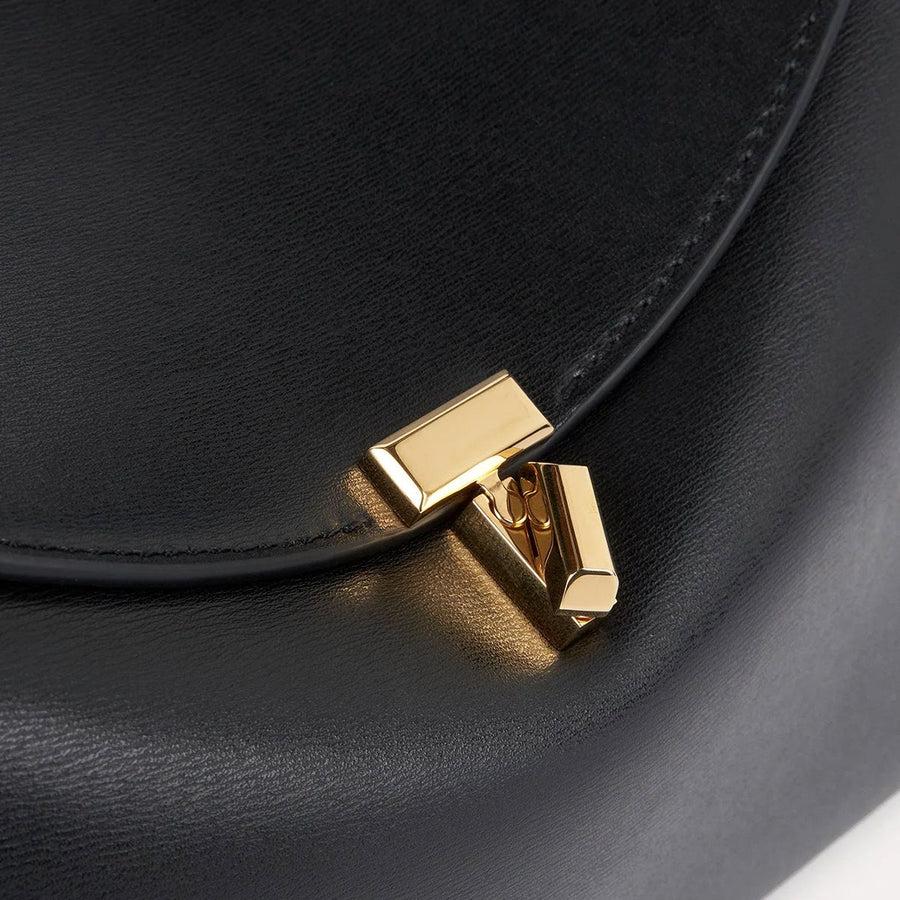
Top-grain leather offers polish and consistency. The light sanding removes surface blemishes, creating a smoother, more even base for finishing.
- Surface refinement: A cleaner, more uniform appearance
- Consistent colour: Easier to dye evenly, allowing a wide range of shades
- Finishing techniques: Protective coatings can improve stain and water resistance
- Flexibility: Typically softer and more pliable from the outset
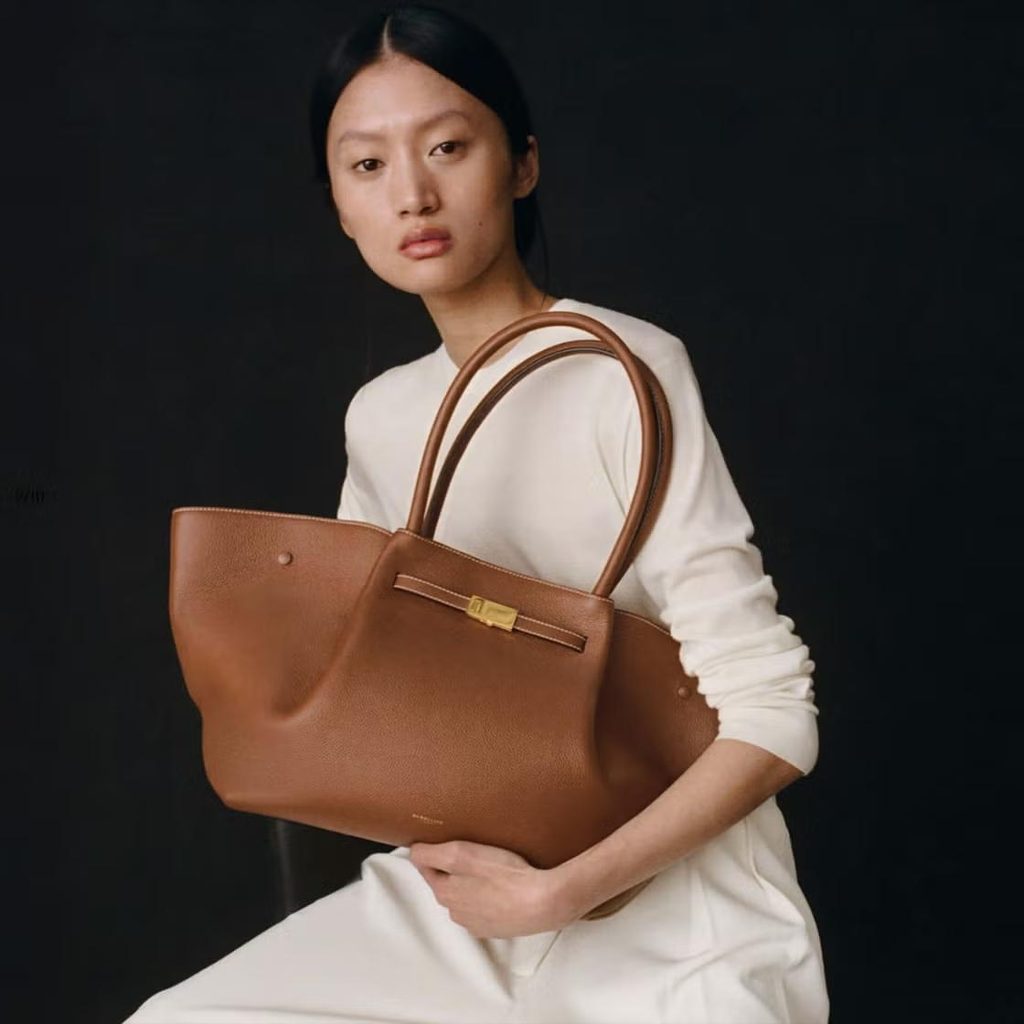
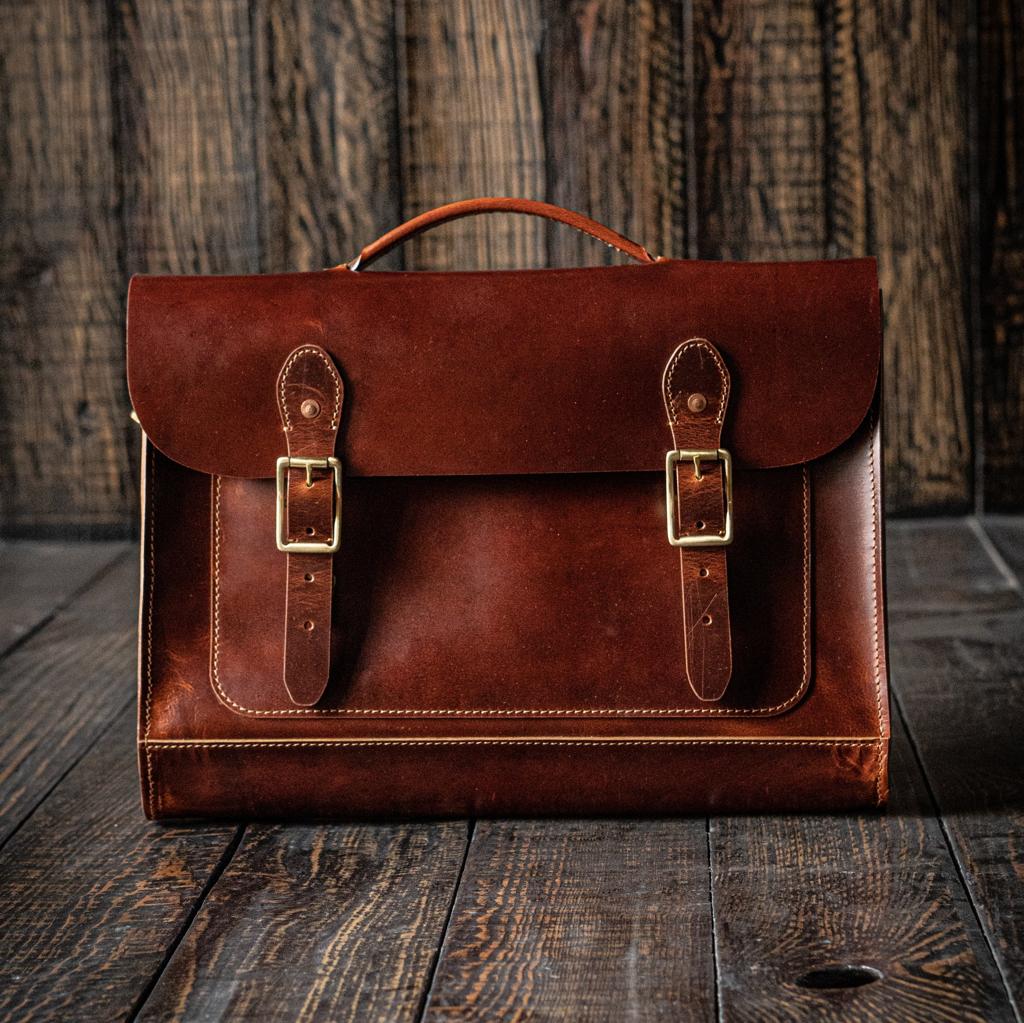
These qualities make it a popular choice for contemporary designer handbags, where sleek, uniform surfaces and reliable colour are valued.
Full-Grain vs. Top-Grain: A Detailed Comparison
- Appearance: Full-grain shows natural character, while top-grain looks smoother and more uniform
- Texture: Full-grain feels richer and more organic, whereas top-grain feels sleek and refined
- Durability: Full-grain is generally the stronger of the two, though quality top-grain remains very durable
- Ageing: Full-grain develops a pronounced patina, while top-grain ages more subtly
- Maintenance: Top-grain is often easier to care for thanks to its protective finish, and full-grain benefits from regular conditioning
- Aesthetic: Full-grain suits those who love a lived-in, evolving look, and top-grain suits those who prefer a polished, consistent one
Neither is inherently superior. Excellent bags exist in both, and quality depends on the hide, the tanning and the craftsmanship as much as the classification.
The Influence of Leather Quality on Handbag Design
Material choice shapes nearly every design decision.
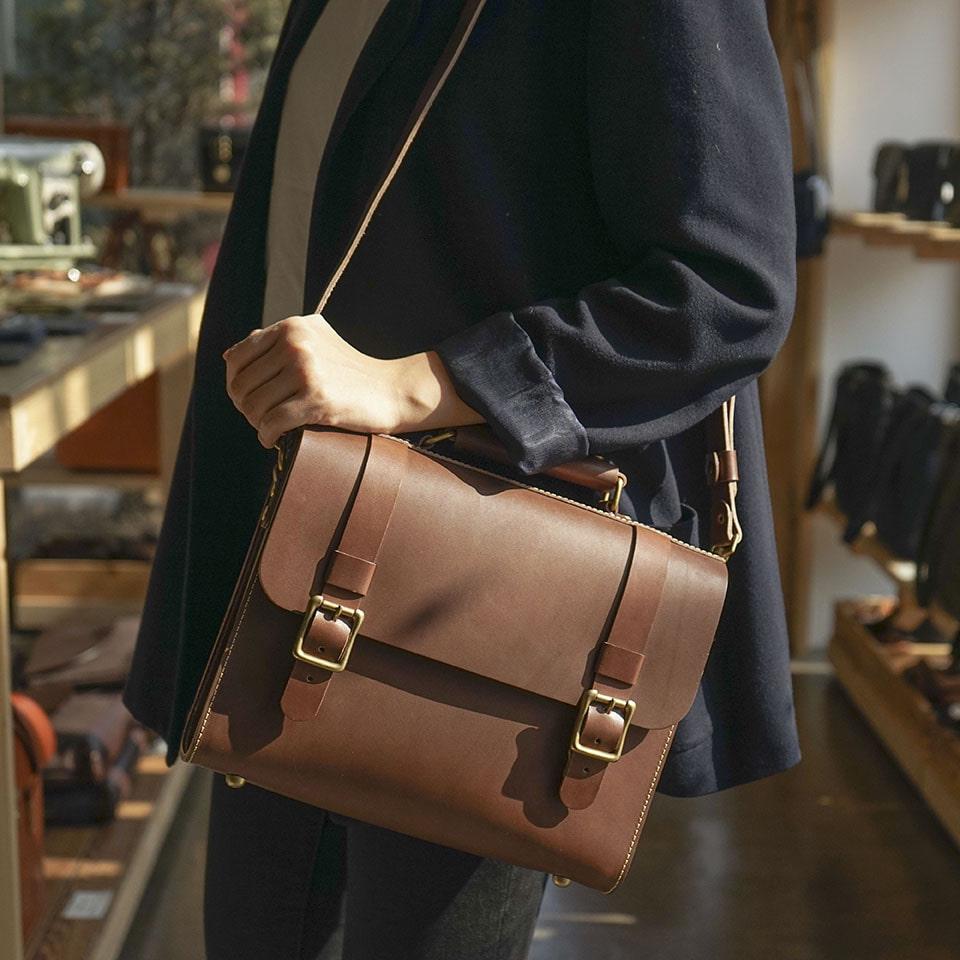
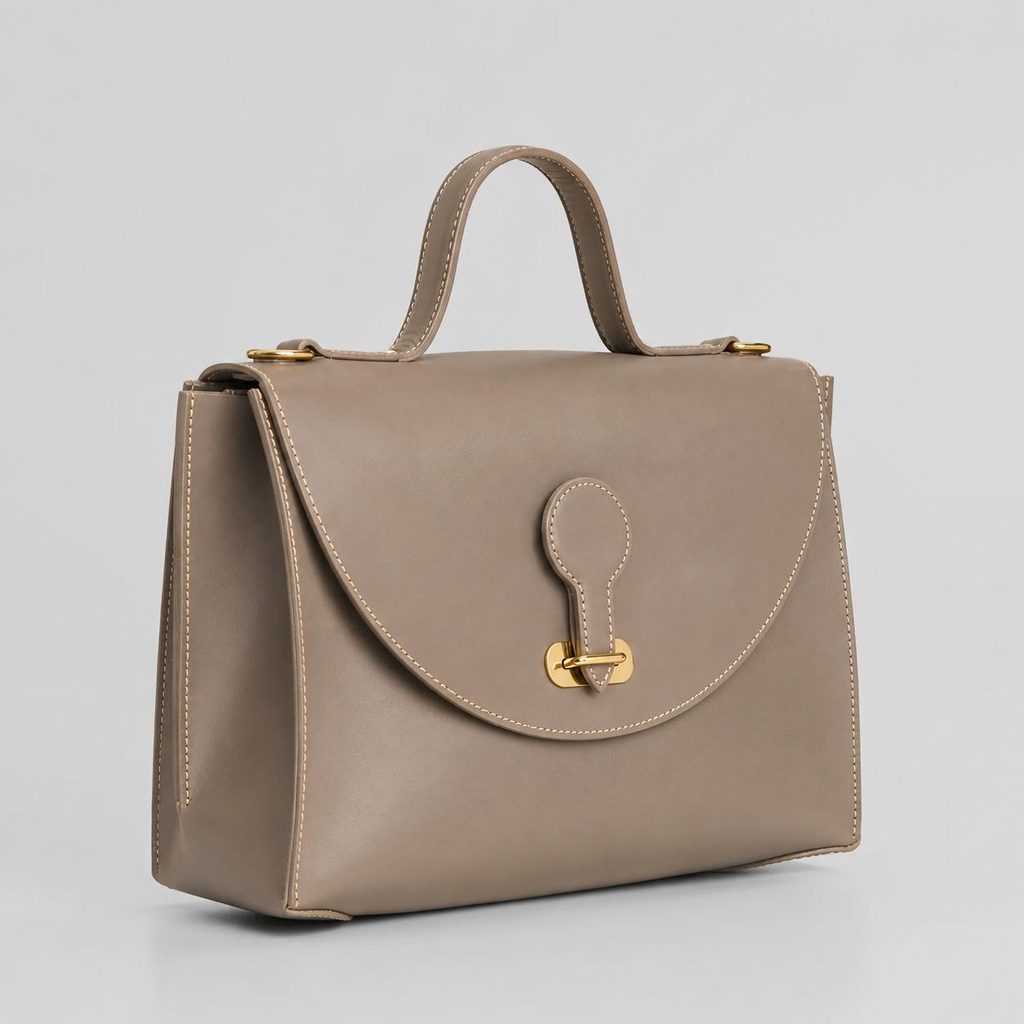
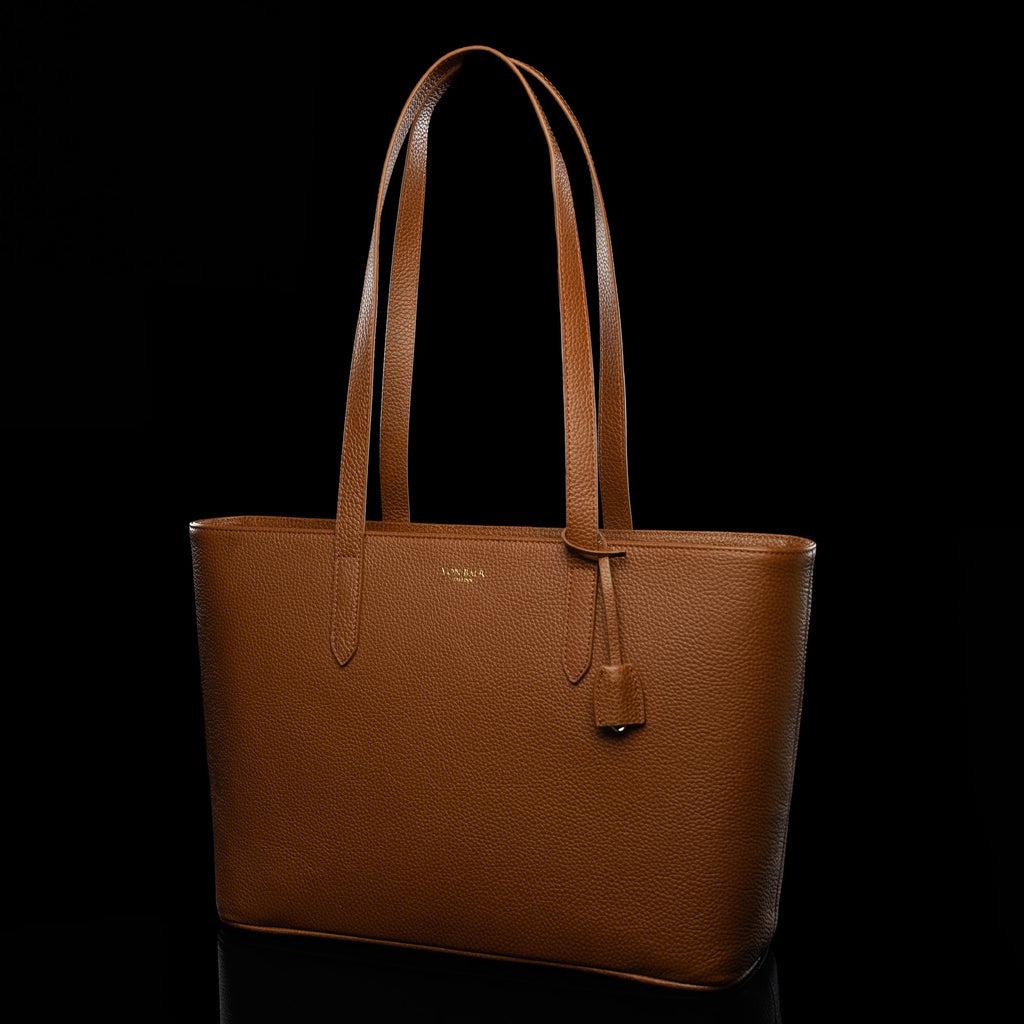
- Construction: Firmer leathers support structured shapes with crisp edges
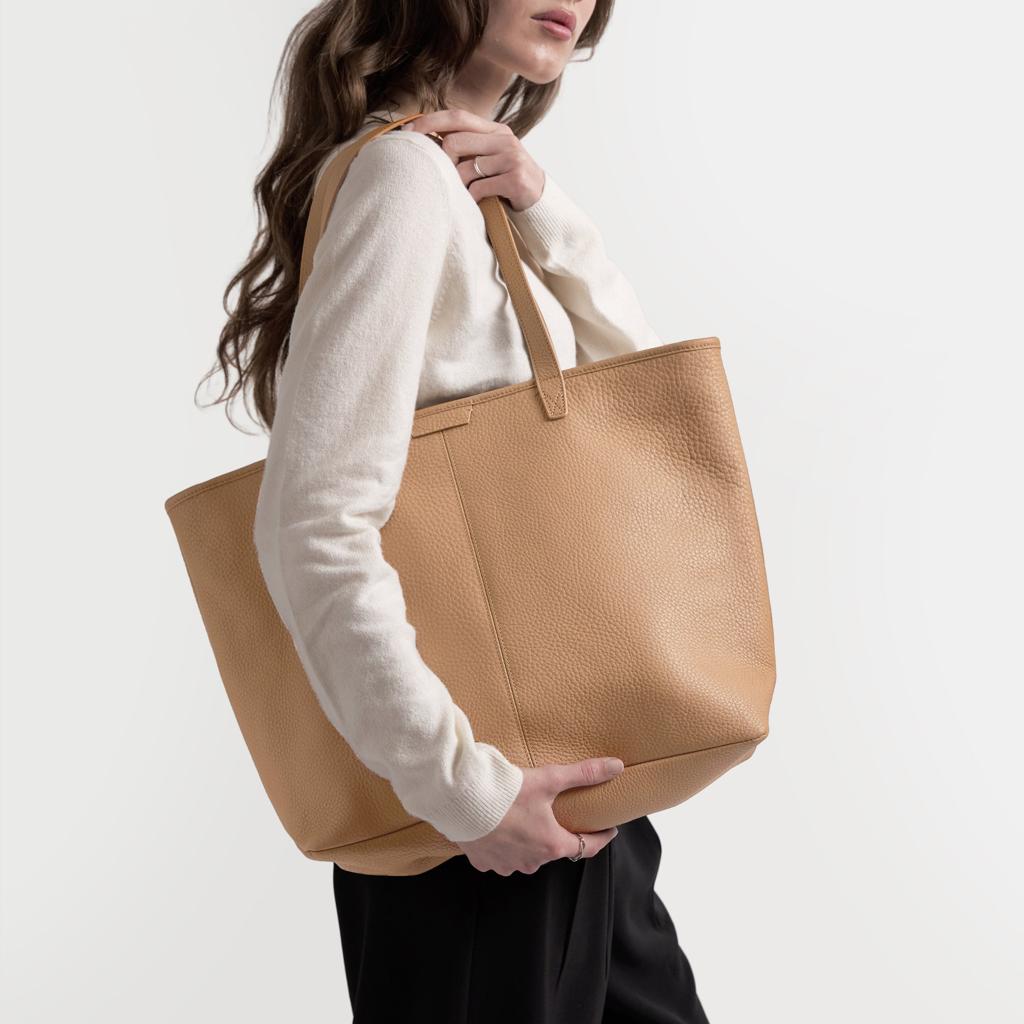
- Silhouette: Supple leathers drape well for slouchy and curved forms
- Finishing: Smooth surfaces allow precise edge painting and clean lines
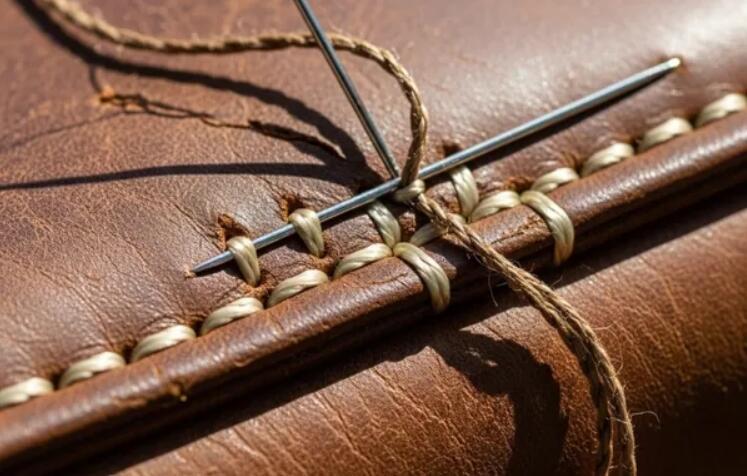
- Long-term performance: Quality leather holds stitching, hardware and shape under daily use
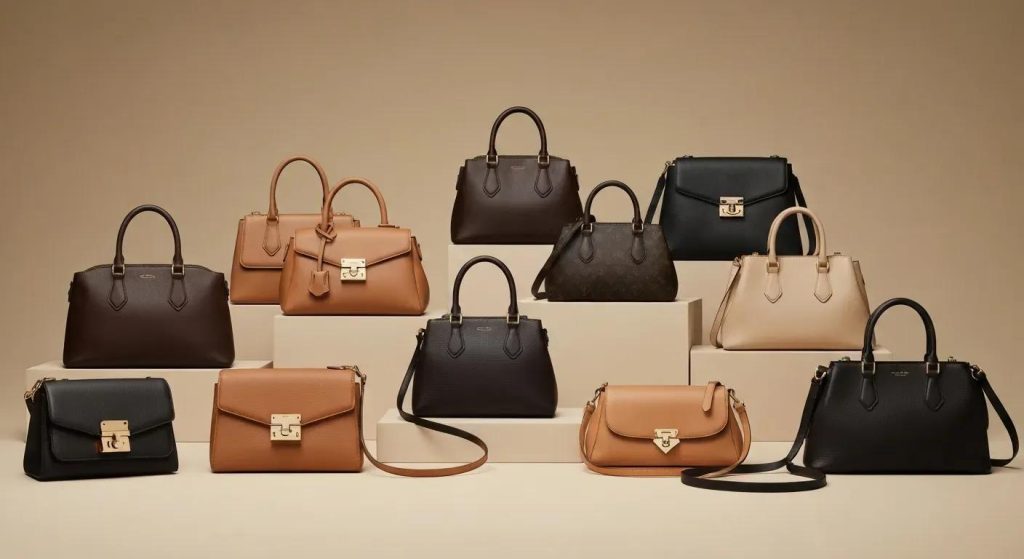
A minimalist bag, which relies on pure form, depends especially on exceptional material.
How to Choose the Right Leather for Your Lifestyle
Match the leather to how you live.
- If you love character and longevity: Choose full-grain and enjoy its evolving patina
- If you want a polished, low-fuss finish: Top-grain is an excellent everyday option
- If you carry your bag daily: Prioritise durability and a protective finish
- If you prefer minimal upkeep: Look for top-grain with a treated surface
Always check the stitching, edges and hardware, and buy from reputable retailers that describe their materials clearly.
Conclusion: Quality Beyond the Surface
Understanding leather classifications is a useful starting point, but true quality lies in the whole: the hide, the making and the care it receives. Choose the leather that suits your taste and lifestyle, and it will reward you with years of quiet beauty.